第 1/6 張圖片



圖片庫
第 1/6 張圖片
有類似物品要出售?
Oxford Constitutional Theory Ser.: The Cosmopolitan Constitution by Alexander So
US $38.50
大約HK$ 299.86
狀況:
“No use, not read, no details for consideration from storage”
Oops! Looks like we're having trouble connecting to our server.
Refresh your browser window to try again.
退貨:
不可退貨.
保障:
請參閱物品說明或聯絡賣家以取得詳細資料。閱覽全部詳情查看保障詳情
(不符合「eBay 買家保障方案」資格)
關於物品
物品細節
- 物品狀況
- 很新
- 賣家備註
- “No use, not read, no details for consideration from storage”
- Country of Origin
- United Kingdom
- Custom Bundle
- No
- Educational Level
- Pro
- Personalized
- No
- Features
- Trade Paperback
- MPN
- No
- Level
- Pro
- ISBN
- 9780198797944
關於產品
Product Identifiers
Publisher
Oxford University Press, Incorporated
ISBN-10
019879794X
ISBN-13
9780198797944
eBay Product ID (ePID)
20038272786
Product Key Features
Number of Pages
304 Pages
Language
English
Publication Name
Cosmopolitan Constitution
Publication Year
2016
Subject
Constitutional, Constitutions, General
Type
Textbook
Subject Area
Law, Political Science
Series
Oxford Constitutional Theory Ser.
Format
Trade Paperback
Dimensions
Item Height
0.7 in
Item Weight
15.9 Oz
Item Length
9.3 in
Item Width
6.2 in
Additional Product Features
Intended Audience
Scholarly & Professional
TitleLeading
The
Dewey Edition
23
Reviews
"Somek's diagnosis of the current state of constitutional theorizing is at once compelling and provocative. What is truly remarkable about this book is the way Somek links debates about constitutionalism to global forces in a way no one else does. This is an extraordinary achievement. Even if one disagrees with the thesis, the arguments must be taken seriously. No one else in constitutional or legal theory is writing anything like this. Quite simply, this is a book no one can ignore." -- Dennis Patterson, Constitutional Commentary "One... reads in Somek's pages an absorbing critical genealogy of the modern constitutional project." -- Frank Michelman, Constellations, ''One reads in Somek's pages an absorbing critical genealogy of the modern constitutional project.''Frank Michelman, Constellations''Somek's diagnosis of the current state of constitutional theorizing is at once compelling and provocative. What is truly remarkable about this book is the way Somek links debates about constitutionalism to global forces in a way no one else does. This is an extraordinary achievement. Even if one disagrees with the thesis, the arguments must be taken seriously. No one else in constitutional or legal theory is writing anything like this. Quite simply, thisis a book no one can ignore.''Dennis Patterson, Constitutional Commentary
Dewey Decimal
342.02
Table Of Content
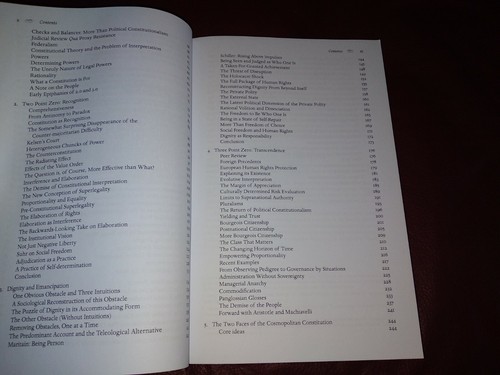
Introduction1. One Point Zero: Powers2. Two Point Zero: Recognition3. Dignity and Emancipation4. Three Point Zero: Transcendence5. The Two Faces of the Cosmopolitan Constitution
Synopsis
Originally the constitution was expected to express and channel popular sovereignty. It was the work of freedom, springing from and facilitating collective self-determination. After the Second World War this perspective changed: the modern constitution owes its authority not only to collective authorship, it also must commit itself credibly to human rights. Thus people recede into the background, and the national constitution becomes embedded into one or other system of 'peer review' among nations.This is what Alexander Somek argues is the creation of the cosmopolitan constitution. Reconstructing what he considers to be the three stages in the development of constitutionalism, he argues that the cosmopolitan constitution is not a blueprint for the constitution beyond the nation state, let alone a constitution of the international community; rather, it stands for constitutional law reaching out beyond its national bounds. This cosmopolitan constitution has two faces: the first, political, face reflects the changed circumstances of constitutional authority. It conceives itself as constrained by international human rights protection, firmly committed to combating discrimination on the grounds of nationality, and to embracing strategies for managing its interaction with other sites of authority, such as the United Nations. The second, administrative, face of the cosmopolitan constitution reveals the demise of political authority, which has been traditionally vested in representative bodies. Political processes yield to various, and often informal, strategies of policy co-ordination so long as there are no reasons to fear that the elementary civil rights might be severely interfered with. It represents constitutional authority for an administered world., Originally the constitution was expected to express and channel popular sovereignty. It was the work of freedom, springing from and facilitating collective self-determination. After the Second World War this perspective changed: the modern constitution owes its authority not only to collective authorship, it also must commit itself credibly to human rights. Thus people recede into the background, and the national constitution becomes embedded into one or other system of 'peer review' among nations. This is what Alexander Somek argues is the creation of the cosmopolitan constitution. Reconstructing what he considers to be the three stages in the development of constitutionalism, he argues that the cosmopolitan constitution is not a blueprint for the constitution beyond the nation state, let alone a constitution of the international community; rather, it stands for constitutional law reaching out beyond its national bounds. This cosmopolitan constitution has two faces: the first, political, face reflects the changed circumstances of constitutional authority. It conceives itself as constrained by international human rights protection, firmly committed to combating discrimination on the grounds of nationality, and to embracing strategies for managing its interaction with other sites of authority, such as the United Nations. The second, administrative, face of the cosmopolitan constitution reveals the demise of political authority, which has been traditionally vested in representative bodies. Political processes yield to various, and often informal, strategies of policy co-ordination so long as there are no reasons to fear that the elementary civil rights might be severely interfered with. It represents constitutional authority for an administered world., This book looks at the changes of the foundations of constitutional authority since the eighteenth century. Somek argues that post WWII, people are no longer the fountain of authority, instead the new commitment to human rights and the 'peer review system' among nations, marks the advent of the cosmopolitan constitution., Originally the constitution was expected to express and channel popular sovereignty. It was the work of freedom, springing from and facilitating collective self-determination. After the Second World War this perspective changed: the modern constitution owes its authority not only to collective authorship, it also must commit itself credibly to human rights. Thus people recede into the background, and the national constitution becomes embedded into one or other system of "peer review" among nations.This is what Alexander Somek argues is the creation of the cosmopolitan constitution. Reconstructing what he considers to be the three stages in the development of constitutionalism, he argues that the cosmopolitan constitution is not a blueprint for the constitution beyond the nation state, let alone a constitution of the international community; rather, it stands for constitutional law reaching out beyond its national bounds. This cosmopolitan constitution has two faces: the first, political, face reflects the changed circumstances of constitutional authority. It conceives itself as constrained by international human rights protection, firmly committed to combating discrimination on the grounds of nationality, and to embracing strategies for managing its interaction with other sites of authority, such as the United Nations. The second, administrative, face of the cosmopolitan constitution reveals the demise of political authority, which has been traditionally vested in representative bodies. Political processes yield to various, and often informal, strategies of policy co-ordination so long as there are no reasons to fear that the elementary civil rights might be severely interfered with. It represents constitutional authority for an administered world.
LC Classification Number
K3161
賣家提供的物品說明
賣家信用評價 (71)
- s***m (642)- 買家留下的信用評價。過去 1 年購買已獲認證This used item arrived quickly and, more importantly, exactly as described and photo graphed. Great eBayer for sure.Buffet Wood Clarinet Bell(#335844678550)
- n***n (820)- 買家留下的信用評價。過去 6 個月購買已獲認證Buch kam gut verpackt und zügig, trotz Übersee. Alles bestens!Hallesche Beiträge Zur Europäischen Aufklärung Ser.: Poema/Gedicht : Die Epistem(#334419750673)
- j***c (2228)- 買家留下的信用評價。過去 6 個月購買已獲認證Received book on time as describedMicrowave Engineering : Passive Circuits by Peter A. Rizzi (1987, Trade...(#334828921353)