第 1/9 張圖片


圖片庫
第 1/9 張圖片
有類似物品要出售?
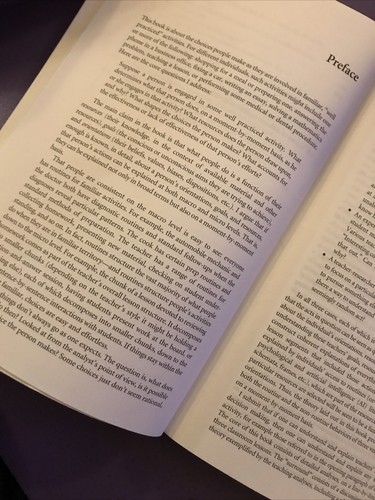
How We Think - Alan Schoenfeld , Studies in Mathematical Thinking and Learning
US $49.90
大約HK$ 388.35
狀況:
Oops! Looks like we're having trouble connecting to our server.
Refresh your browser window to try again.
運送:
US $5.87(大約 HK$ 45.68) USPS Media MailTM.
所在地:San Francisco, California, 美國
送達日期:
估計於 12月9日 (星期二)至 12月12日 (星期五)之間送達 運送地點 94104
退貨:
14 日退貨. 由買家支付退貨運費,如果你使用 eBay 郵寄標籤,相關費用將從你的退款金額中扣除.
保障:
請參閱物品說明或聯絡賣家以取得詳細資料。閱覽全部詳情查看保障詳情
(不符合「eBay 買家保障方案」資格)
關於物品
物品細節
- 物品狀況
- 很新: 狀況完好的書籍。封面發亮且沒有損壞,精裝本書籍含書皮。不存在缺頁或內頁受損,無褶皺或破損,同時也沒有對文字標注/標記,或在留白處書寫內容。內封面上標記極少。書籍的磨損和破損程度也很低。 查看所有物品狀況定義會在新視窗或分頁中開啟
- Country of Origin
- United States
- Book Title
- How We Think
- Personalized
- No
- Features
- 1st Edition
- ISBN
- 9780415878654
關於產品
Product Identifiers
Publisher
Routledge
ISBN-10
0415878659
ISBN-13
9780415878654
eBay Product ID (ePID)
79559394
Product Key Features
Number of Pages
246 Pages
Publication Name
How We Think : a Theory of Goal-Oriented Decision Making and Its Educational Applications
Language
English
Subject
Decision-Making & Problem Solving, General, Classroom Management, Teaching Methods & Materials / Mathematics, Creativity
Publication Year
2010
Type
Textbook
Subject Area
Self-Help, Education
Series
Studies in Mathematical Thinking and Learning Ser.
Format
Trade Paperback
Dimensions
Item Height
0.5 in
Item Weight
12.8 Oz
Item Length
9 in
Item Width
6.4 in
Additional Product Features
Intended Audience
College Audience
LCCN
2010-029514
Dewey Edition
22
Reviews
"In-the-moment decision making is perhaps the most central activity of teaching; it is also one of the most elusive teaching activities to study. How We Thinkpresents an approach to modeling in-the-moment decision making as a function of the teacher "s goals, orientations, and resources, and invites the educational community to explore the use of this model as a tool for understanding and improving teaching. The product of over a decade of scholarship, it is a wonderful example of theory building through careful, detailed empirical analysis." --Hilda Borko, Professor of Education, Stanford University "Alan H. Schoenfeld presents a general scheme for analyzing a person's activity in a dynamic environment by which he frames explanatory accounts of classroom mathematics teaching. There is much here that contributes to understanding important aspects of teaching and that shows how standard assumptions of psychological choice theory can be modified and extended to provide explanations of teaching." --James Greeno, Visiting Professor, School of Education, University of Pittsburgh, "How We Thinkis an important resource for mathematics education, as well as the decision making sciences…The book is highly recommended to anyone interested in self analyzing teaching practice, researching teacher practices, building a program of research, or simply interested in how we think. The moderate length of the book also facilitates it being accessible for semester long graduate seminars. Last but not least the appendices contain a wealth of real data with notes and URL's for those interested in learning fine grained analysis of teaching data."-Journal for Research in Mathematics Education "In-the-moment decision making is perhaps the most central activity of teaching; it is also one of the most elusive teaching activities to study. How We Thinkpresents an approach to modeling in-the-moment decision making as a function of the teacher's goals, orientations, and resources, and invites the educational community to explore the use of this model as a tool for understanding and improving teaching. The product of over a decade of scholarship, it is a wonderful example of theory building through careful, detailed empirical analysis."--Hilda Borko, Professor of Education, Stanford University "Alan H. Schoenfeld presents a general scheme for analyzing a person's activity in a dynamic environment by which he frames explanatory accounts of classroom mathematics teaching. There is much here that contributes to understanding important aspects of teaching and that shows how standard assumptions of psychological choice theory can be modified and extended to provide explanations of teaching."--James Greeno, Visiting Professor, School of Education, University of Pittsburgh "Reading this book is a must for members of the mathematics education community, not only because of the standing of its author and his writing style, but also because of the issue it addresses which is at the core of today's agenda: mathematics teaching and the need for theoretical frameworks to study it."-Abraham Arcavi, ZDM: The International Journal on Mathematics Education, "[It] constitutes an important scholarly contribution to our understanding of a key determinant to the quality of what takes place in the complex activity known as teaching and learning. In How We Think, Schoenfeld homes in on a facet of instructional practice that is central and yet invisible. The results are illuminating." --Teachers College Record "How We Think is an important resource for mathematics education, as well as the decision making sciences...The book is highly recommended to anyone interested in self analyzing teaching practice, researching teacher practices, building a program of research, or simply interested in how we think. The moderate length of the book also facilitates it being accessible for semester long graduate seminars. Last but not least the appendices contain a wealth of real data with notes and URL's for those interested in learning fine grained analysis of teaching data."--Journal for Research in Mathematics Education "In-the-moment decision making is perhaps the most central activity of teaching; it is also one of the most elusive teaching activities to study. How We Think presents an approach to modeling in-the-moment decision making as a function of the teacher's goals, orientations, and resources, and invites the educational community to explore the use of this model as a tool for understanding and improving teaching. The product of over a decade of scholarship, it is a wonderful example of theory building through careful, detailed empirical analysis."--Hilda Borko, Professor of Education, Stanford University "Alan H. Schoenfeld presents a general scheme for analyzing a person's activity in a dynamic environment by which he frames explanatory accounts of classroom mathematics teaching. There is much here that contributes to understanding important aspects of teaching and that shows how standard assumptions of psychological choice theory can be modified and extended to provide explanations of teaching."--James Greeno, Visiting Professor, School of Education, University of Pittsburgh "Reading this book is a must for members of the mathematics education community, not only because of the standing of its author and his writing style, but also because of the issue it addresses which is at the core of today's agenda: mathematics teaching and the need for theoretical frameworks to study it."--Abraham Arcavi, ZDM: The International Journal on Mathematics Education, "[It] constitutes an important scholarly contribution to our understanding of a key determinant to the quality of what takes place in the complex activity known as teaching and learning. In How We Think, Schoenfeld homes in on a facet of instructional practice that is central and yet invisible. The results are illuminating." --Teachers College Record "How We Think is an important resource for mathematics education, as well as the decision making sciences...The book is highly recommended to anyone interested in self analyzing teaching practice, researching teacher practices, building a program of research, or simply interested in how we think. The moderate length of the book also facilitates it being accessible for semester long graduate seminars. Last but not least the appendices contain a wealth of real data with notes and URL's for those interested in learning fine grained analysis of teaching data."--Journal for Research in Mathematics Education "In-the-moment decision making is perhaps the most central activity of teaching; it is also one of the most elusive teaching activities to study. How We Think presents an approach to modeling in-the-moment decision making as a function of the teacher's goals, orientations, and resources, and invites the educational community to explore the use of this model as a tool for understanding and improving teaching. The product of over a decade of scholarship, it is a wonderful example of theory building through careful, detailed empirical analysis."--Hilda Borko, Professor of Education, Stanford University "Alan H. Schoenfeld presents a general scheme for analyzing a person's activity in a dynamic environment by which he frames explanatory accounts of classroom mathematics teaching. There is much here that contributes to understanding important aspects of teaching and that shows how standard assumptions of psychological choice theory can be modified and extended to provide explanations of teaching."--James Greeno, Visiting Professor, School of Education, University of Pittsburgh "Reading this book is a must for members of the mathematics education community, not only because of the standing of its author and his writing style, but also because of the issue it addresses which is at the core of today's agenda: mathematics teaching and the need for theoretical frameworks to study it."--Abraham Arcavi, ZDM: The International Journal on Mathematics Education, "In-the-moment decision making is perhaps the most central activity of teaching; it is also one of the most elusive teaching activities to study. How We Think presents an approach to modeling in-the-moment decision making as a function of the teacher's goals, orientations, and resources, and invites the educational community to explore the use of this model as a tool for understanding and improving teaching. The product of over a decade of scholarship, it is a wonderful example of theory building through careful, detailed empirical analysis."--Hilda Borko, Professor of Education, Stanford University"Alan H. Schoenfeld presents a general scheme for analyzing a person's activity in a dynamic environment by which he frames explanatory accounts of classroom mathematics teaching. There is much here that contributes to understanding important aspects of teaching and that shows how standard assumptions of psychological choice theory can be modified and extended to provide explanations of teaching."--James Greeno, Visiting Professor, School of Education, University of Pittsburgh, "[It] constitutes an important scholarly contribution to our understanding of a key determinant to the quality of what takes place in the complex activity known as teaching and learning. In How We Think, Schoenfeld homes in on a facet of instructional practice that is central and yet invisible. The results are illuminating." --Teachers College Record "How We Think is an important resource for mathematics education, as well as the decision making sciences'e¦The book is highly recommended to anyone interested in self analyzing teaching practice, researching teacher practices, building a program of research, or simply interested in how we think. The moderate length of the book also facilitates it being accessible for semester long graduate seminars. Last but not least the appendices contain a wealth of real data with notes and URL'e(tm)s for those interested in learning fine grained analysis of teaching data."'e"Journal for Research in Mathematics Education "In-the-moment decision making is perhaps the most central activity of teaching; it is also one of the most elusive teaching activities to study. How We Think presents an approach to modeling in-the-moment decision making as a function of the teacher'e(tm)s goals, orientations, and resources, and invites the educational community to explore the use of this model as a tool for understanding and improving teaching. The product of over a decade of scholarship, it is a wonderful example of theory building through careful, detailed empirical analysis."--Hilda Borko, Professor of Education, Stanford University "Alan H. Schoenfeld presents a general scheme for analyzing a person's activity in a dynamic environment by which he frames explanatory accounts of classroom mathematics teaching. There is much here that contributes to understanding important aspects of teaching and that shows how standard assumptions of psychological choice theory can be modified and extended to provide explanations of teaching."--James Greeno, Visiting Professor, School of Education, University of Pittsburgh "Reading this book is a must for members of the mathematics education community, not only because of the standing of its author and his writing style, but also because of the issue it addresses which is at the core of today'e(tm)s agenda: mathematics teaching and the need for theoretical frameworks to study it."'e"Abraham Arcavi, ZDM: The International Journal on Mathematics Education, "[It] constitutes an important scholarly contribution to our understanding of a key determinant to the quality of what takes place in the complex activity known as teaching and learning. In How We Think, Schoenfeld homes in on a facet of instructional practice that is central and yet invisible. The results are illuminating." --Teachers College Record "How We Thinkis an important resource for mathematics education, as well as the decision making sciences…The book is highly recommended to anyone interested in self analyzing teaching practice, researching teacher practices, building a program of research, or simply interested in how we think. The moderate length of the book also facilitates it being accessible for semester long graduate seminars. Last but not least the appendices contain a wealth of real data with notes and URL's for those interested in learning fine grained analysis of teaching data."-Journal for Research in Mathematics Education "In-the-moment decision making is perhaps the most central activity of teaching; it is also one of the most elusive teaching activities to study. How We Thinkpresents an approach to modeling in-the-moment decision making as a function of the teacher's goals, orientations, and resources, and invites the educational community to explore the use of this model as a tool for understanding and improving teaching. The product of over a decade of scholarship, it is a wonderful example of theory building through careful, detailed empirical analysis."--Hilda Borko, Professor of Education, Stanford University "Alan H. Schoenfeld presents a general scheme for analyzing a person's activity in a dynamic environment by which he frames explanatory accounts of classroom mathematics teaching. There is much here that contributes to understanding important aspects of teaching and that shows how standard assumptions of psychological choice theory can be modified and extended to provide explanations of teaching."--James Greeno, Visiting Professor, School of Education, University of Pittsburgh "Reading this book is a must for members of the mathematics education community, not only because of the standing of its author and his writing style, but also because of the issue it addresses which is at the core of today's agenda: mathematics teaching and the need for theoretical frameworks to study it."-Abraham Arcavi, ZDM: The International Journal on Mathematics Education
Illustrated
Yes
Dewey Decimal
370.15/24
Table Of Content
Introduction and Acknowledgments 1. The Big Picture 2. Reflections, Caveats, Doubts, and Rationalizations 3. The Structure of the Representations Used in this Book 4. Lesson Analysis I: A beginning teacher carrying out a traditional lesson 5. Lesson Analysis II: An experienced teacher carrying out a non-traditional lesson 6. Lesson Analysis III: Third graders! A non-traditional lesson with an emergent agenda 7. Lesson Analysis IV: The analysis of a doctor-patient Consultation - an act of joint problem solving 8. Next Steps Indices, etc
Synopsis
Teachers try to help their students learn. But why do they make the particular teaching choices they do? What resources do they draw upon? What accounts for the success or failure of their efforts? In How We Think , esteemed scholar and mathematician, Alan H. Schoenfeld, proposes a groundbreaking theory and model for how we think and act in the classroom and beyond. Based on thirty years of research on problem solving and teaching, Schoenfeld provides compelling evidence for a concrete approach that describes how teachers, and individuals more generally, navigate their way through in-the-moment decision-making in well-practiced domains. Applying his theoretical model to detailed representations and analyses of teachers at work as well as of professionals outside education, Schoenfeld argues that understanding and recognizing the goal-oriented patterns of our day to day decisions can help identify what makes effective or ineffective behavior in the classroom and beyond., Teachers try to help their students learn. But why do they make the particular teaching choices they do? What resources do they draw upon? What accounts for the success or failure of their efforts? In How We Think, esteemed scholar and mathematician, Alan H. Schoenfeld, proposes a groundbreaking theory and model for how we think and act in the classroom and beyond. Based on thirty years of research on problem solving and teaching, Schoenfeld provides compelling evidence for a concrete approach that describes how teachers, and individuals more generally, navigate their way through in-the-moment decision-making in well-practiced domains. Applying his theoretical model to detailed representations and analyses of teachers at work as well as of professionals outside education, Schoenfeld argues that understanding and recognizing the goal-oriented patterns of our day to day decisions can help identify what makes effective or ineffective behavior in the classroom and beyond.
LC Classification Number
LB1027
賣家提供的物品說明
賣家信用評價 (259)
- j***h (75)- 買家留下的信用評價。過去 6 個月購買已獲認證My book came on time, well packaged and exactly as described. Excellent and communicative seller, I'm very happy.Characters 7 Basic Art of the Five Star Stories Dragon Klein by Mamoru Nagano(#286436093551)
- a***7 (344)- 買家留下的信用評價。過去 6 個月購買已獲認證Items recived as described. Items were well packaged and arrived in good cindition. This was a good transaction.
- 3***_- 買家留下的信用評價。過去 6 個月購買已獲認證Excellent seller and transaction. Well packed for shipment, fast dispatch. Would purchase from them again.NOW YOU KNOW: THE UNAUTHORIZED GUIDE TO G.I. JOE TV & COMICS by Lars Pearson NEW(#285655873021)